
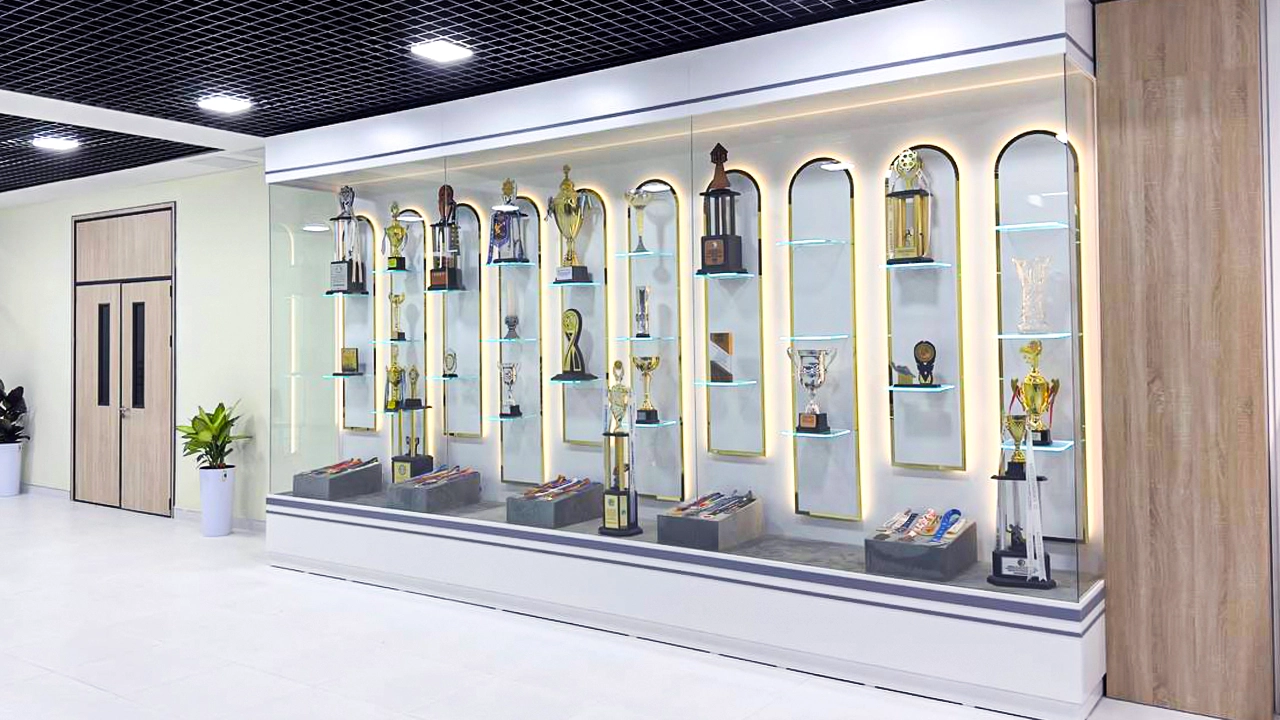
Museum Display Cases and Stands in Tashkent
We make museum equipment for permanent and temporary exhibitions in Tashkent: display cases, stands, podiums, mounts, information structures and wayfinding. These can be fixed elements, mobile structures or modular systems that are rearranged for the next exhibition.
We choose the solution to fit the hall dimensions, the visitor route and the placement format. The equipment must be stable, easy to maintain, present the exhibit neatly and withstand a daily flow of visitors.
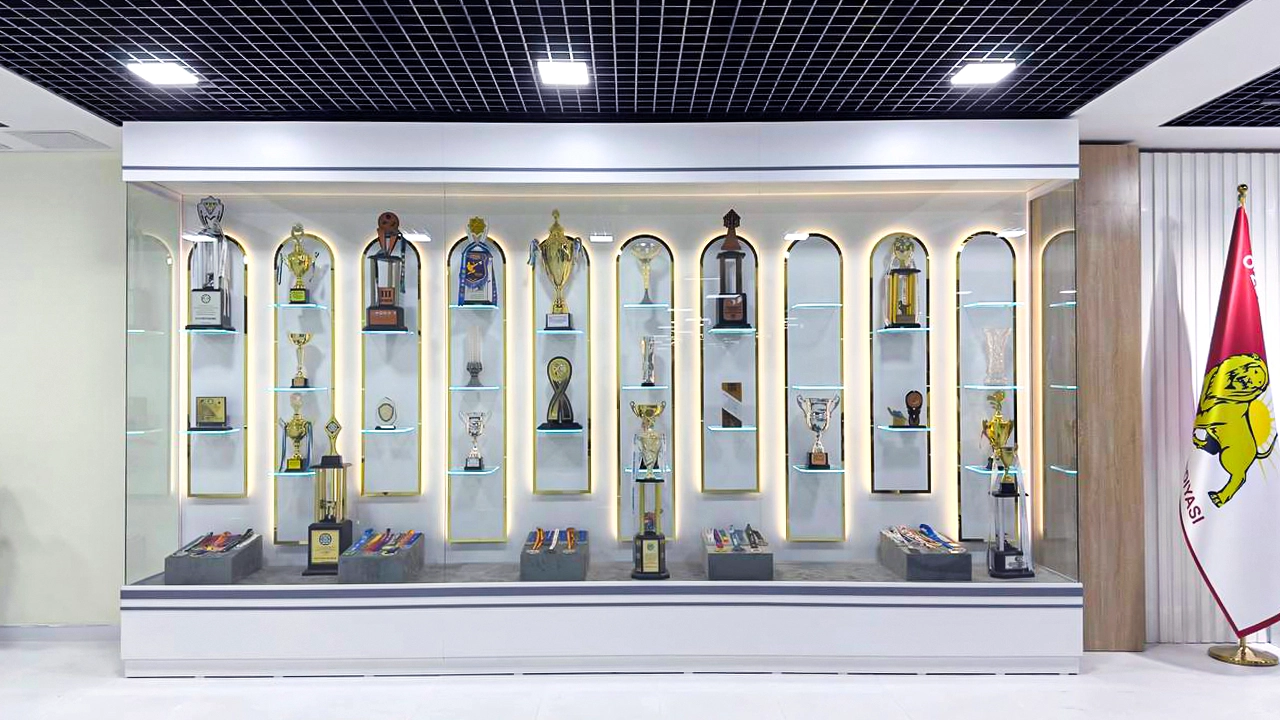
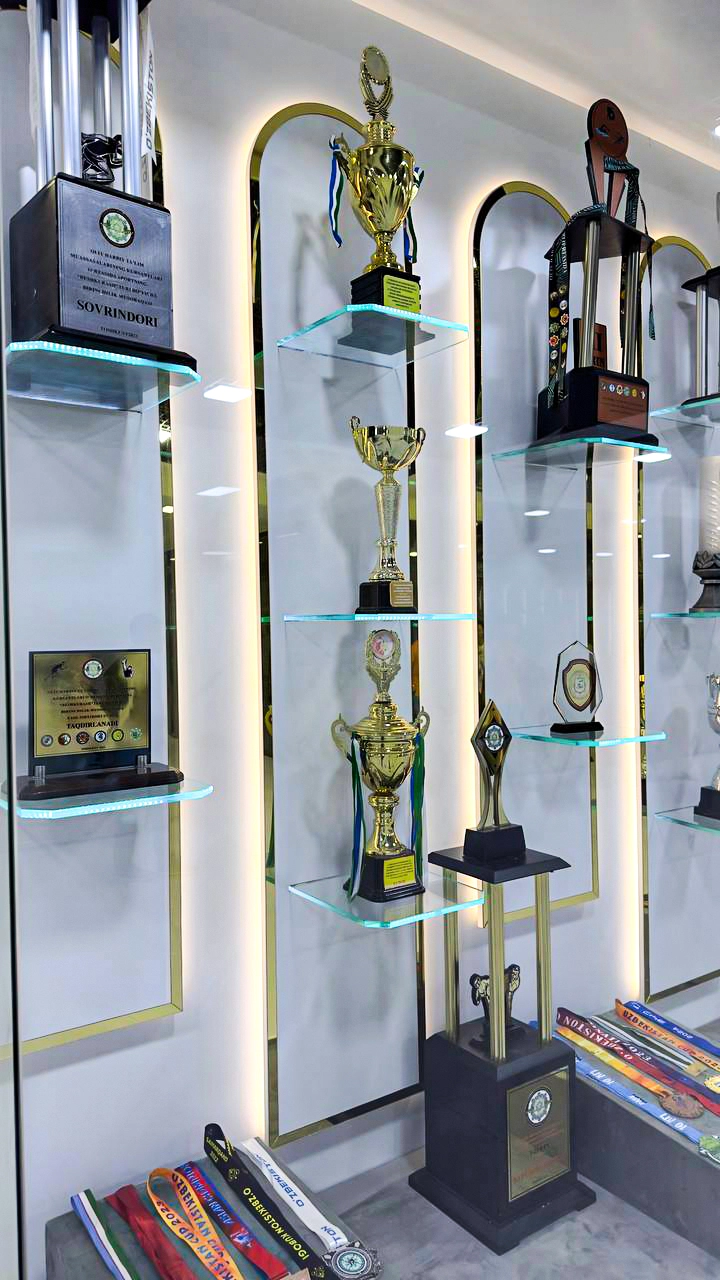
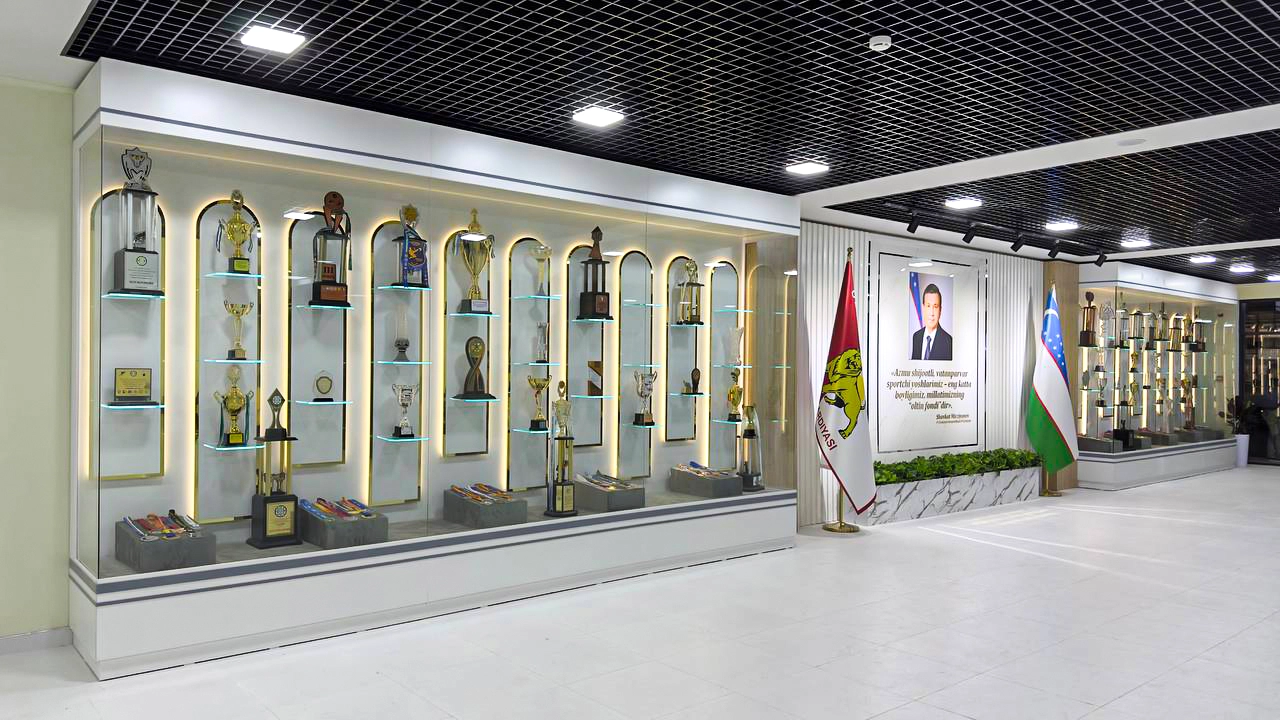
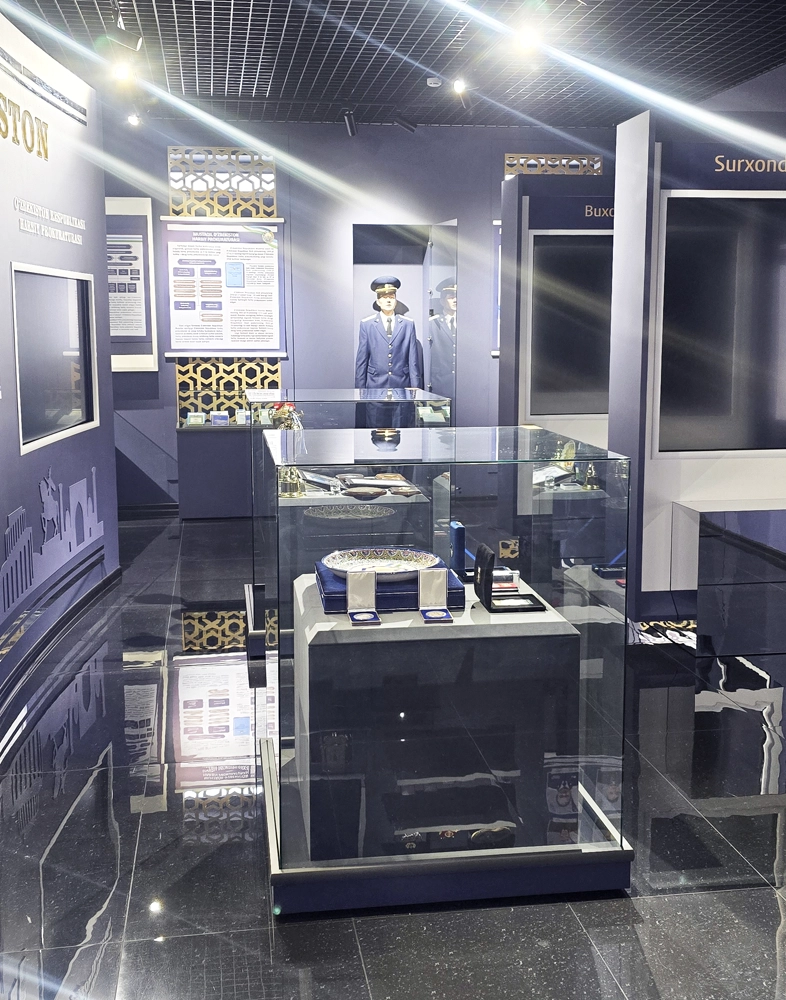
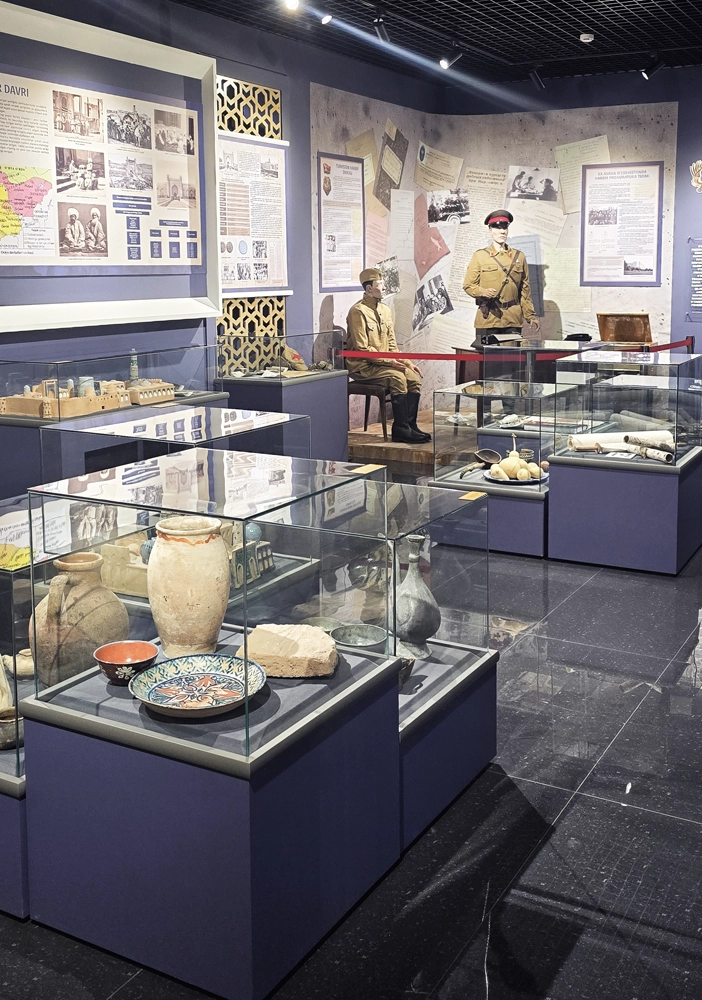
Types of Display Cases for Different Exhibits
The design is chosen to suit the object, and five basic formats cover most exhibition tasks.
- Tabletop case, 90-120 cm high: coins, jewelry and manuscripts at eye level
- Floor-standing case, up to 200 cm high: costumes, weapons and sculpture with a 360° all-round view
- Wall case, 8-20 cm deep: paintings, documents, bas-reliefs
- Table case with a 15-30° sloped top: books, maps and archaeological finds without glare
- Solid glass or acrylic cover on a podium: a single object with minimal visible fixings
Glass and Case Frame
For glazing we use low-iron museum glass: it transmits up to 91% of light and has no green tint on the edges, unlike ordinary float glass. Anti-reflective coating cuts reflections to about 1%. Tempered glass 6-10 mm thick breaks into blunt granules, and for valuable one-of-a-kind items laminated glass is the right choice: the interlayer holds the fragments together and protects against impact.
We make the frame from aluminum profile, steel or coated MDF. Aluminum gives a light, rigid structure with thin frames, steel is needed for large floor-standing cases, and MDF is used for plinths and podiums, painted or veneered to match the interior.
Lighting and Protection of Exhibits
LED fixtures with a color rendering index (CRI) of at least 90 and no ultraviolet render color close to daylight and barely heat the object. Illuminance is set by exhibit type: 50 lux for graphics and textiles, up to 150-200 lux for oil paintings, up to 300 lux for metal and stone. For the most delicate objects, light is delivered by fiber optics, so the heat stays outside the case.
The case is protected by locks with a concealed cylinder, opening sensors and vibration sensors. The signal from the sensors is routed into the museum's security system.
How We Work on Museum Equipment
First we clarify the requirements and calculate the estimate, then we propose materials and design, and agree mockups and dimensions with you. After approval we manufacture the equipment, deliver it and install it on site, checking quality and fitting details on the spot.
Ready to launch your advertising soon?
Write to us and we will quickly guide you through the possible solutions, agree on the materials and propose a launch plan.
We can join at any stage: from idea and design to production, placement and ongoing support.
Frequently asked questions
How long does it take to make display cases in Tashkent?
Serial cases take 3-4 weeks on average; complex projects with climate control and glazing for a specific exhibit take 4 to 8 weeks. We give the exact lead time after measurements, approval of drawings and glazing selection.
Can the equipment be rearranged for new exhibitions?
Yes. Besides fixed elements, we make mobile structures and modular systems that are reassembled for a different exhibition.
What humidity is needed inside a display case?
For organic materials, 45-55% without sharp daily swings is suitable. Art-Sorb silica gel is placed in the lower compartment at 1-2 kg per cubic meter, and for especially sensitive exhibits we install active climate control with sensors.