A school museum is built in four steps: choose a profile, prepare the room, install the basic equipment and then grow the exhibition in stages. You can start with one classroom or a lobby without a large budget, as long as the project sets out in advance how the hall will grow.
Why a school or university needs its own museum
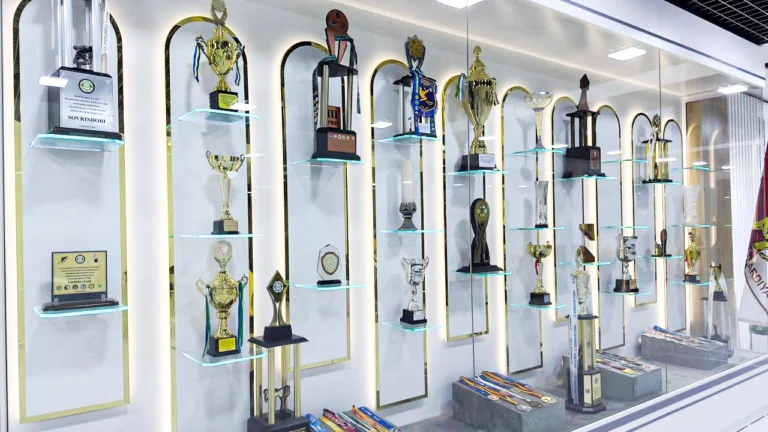
A museum keeps the history of the institution: graduate photographs, documents, awards, teaching aids from different years. For pupils it is living material for history, local studies and biology lessons, and for a university it is also a face for meeting guests and applicants.
Support for the project is easier to win when there is a hall and a clear route that can be shown to the principal, trustees and parents.
A museum serves several groups at once: pupils and teachers, graduates, parents, school guests. For each of them the hall solves its own task, and it is worth writing this down before work starts, because the guest list sets how many people will be inside at the same time.
Which profile to choose
- History of the institution: photographs, diplomas, uniforms, desks, school notebooks from different years.
- Local studies: household items, maps, crafts and the ethnography of the district or city.
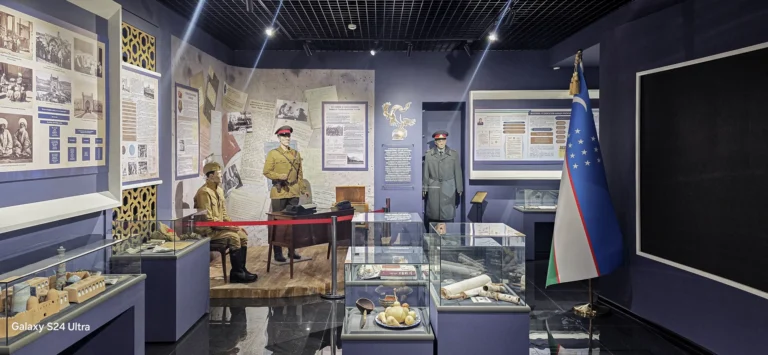
- Military history: awards, documents, letters, models of equipment and terrain.
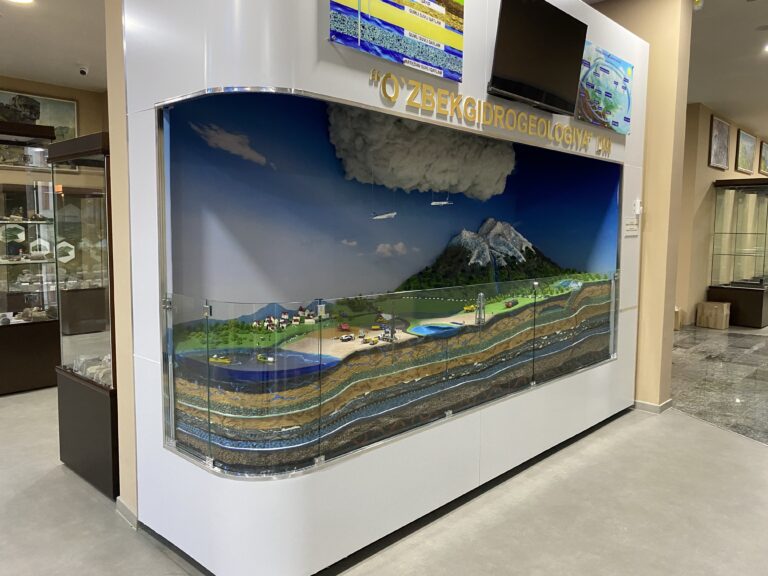
- Natural science: minerals, herbaria, instruments, collections in biology and physics.
The profile decides which equipment is needed. Minerals call for cabinet cases with lighting, documents for wall cases 8-20 cm deep at about 50 lux, models for plinths. One profile at the start is sturdier than a little of everything, because the hall gets a storyline.
Work with the holdings starts before the equipment. Each object is described to one scheme (number, name, date, source, condition), and only then is its place decided. Such an inventory also shows how many cases are needed and of what size, and which objects are better shown as copies or photographs.
Where to place the museum and how to prepare the room
A classroom of 40-60 m² or a wide lobby is enough for the first exhibition. The room is checked on several points: a level floor, walls for fixing stands, outlets for lighting and screens, and a clear passage of 120 cm or more.
Windows are covered with blinds or a UV-protective film, since direct sun will fade documents and photographs within a season. Damp semi-basement rooms are unsuitable: paper and fabric need 45-55% humidity. Evacuation exits and fire access stay clear, and the layout is agreed with the building administration.
Light in a small hall is built on track fixtures with a narrow 15-24° beam and a color rendering index (CRI) of 90 or higher, so the accent lands on the object and not on the wall. The overall level is kept moderate, and documents and photographs get separate zones at 50 lux.
What to put in the hall
Display cases and information boards
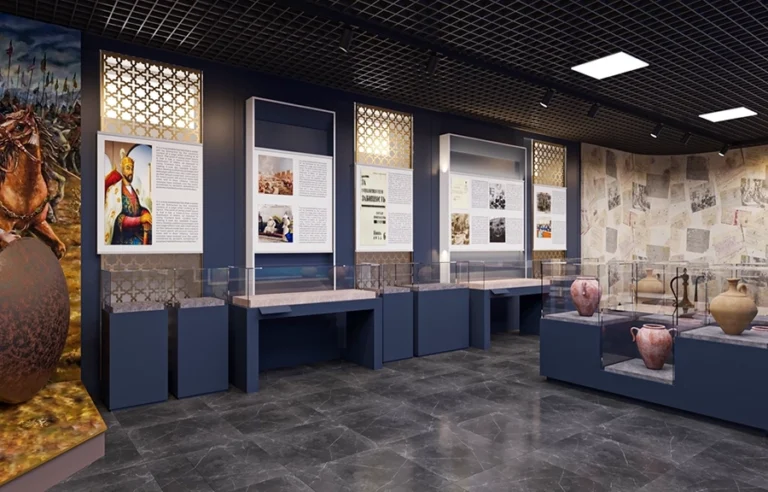
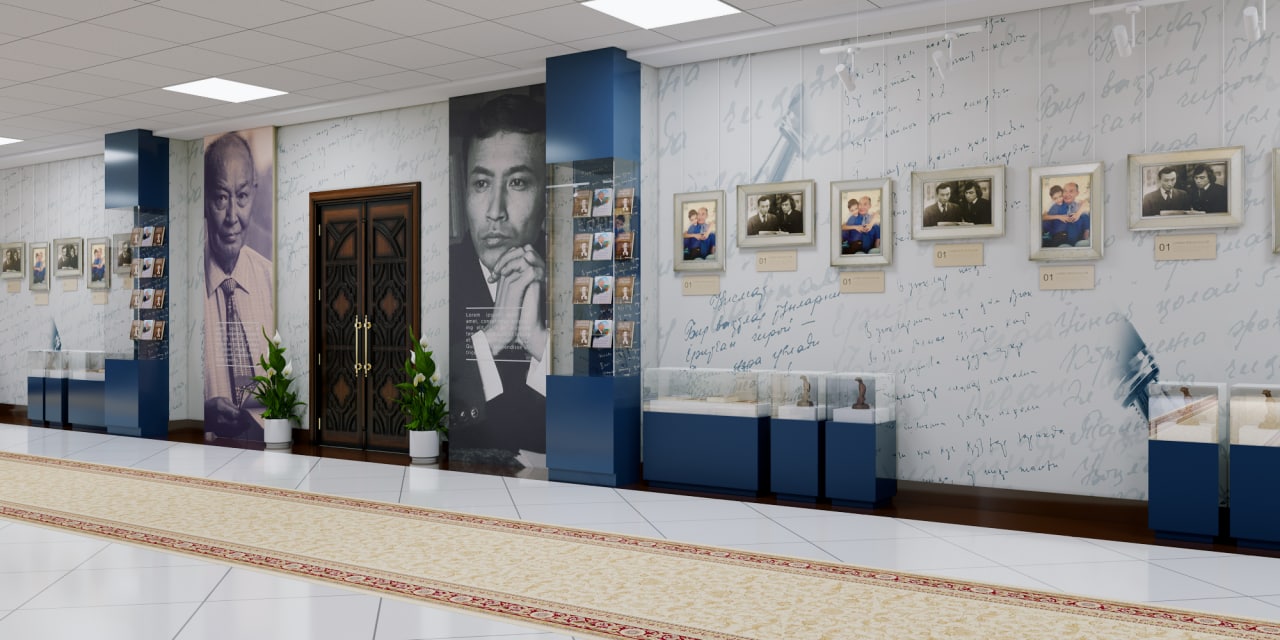
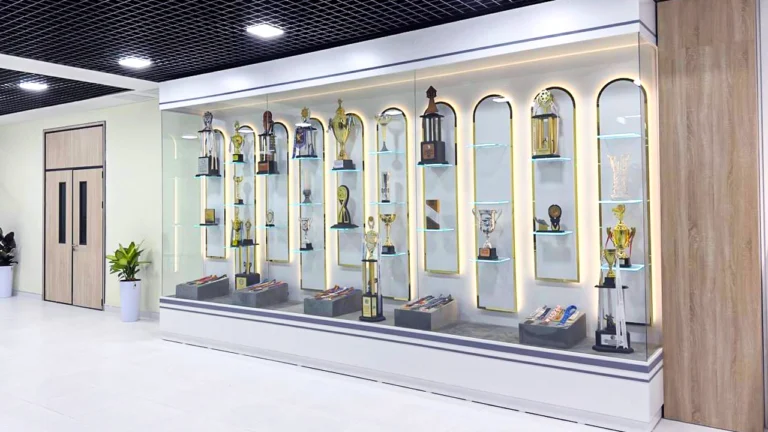
Originals go behind glass: tabletop cases 90-120 cm high for small objects, cabinets for series, wall cases for documents. Glazing is tempered 6-10 mm, and details on types and climate are covered in the article on museum display cases. Photographs and texts go on stands with replaceable panels, since swapping a panel is easier than reprinting a whole stand.
Texts are easier to get wrong than hardware. A label is written briefly, up to 50-60 words, in type of 24 points or more, with the object name, date and source. A long story goes to a stand or a QR code, and the case keeps what can be read in fifteen seconds.
Models and interactive items for children
A model of the school building, the district or a historical scene is built on a plinth of 18-25 mm MDF rated for 150 kg/m² or more. A model draws children better than any label, and it can be extended.
Interactive features can start simple, with a touch panel of 32-65 inches with a photo archive and a QR guide in Uzbek, Russian and English. Wider scenarios are described on the interactive museum.
| Museum zone | Equipment | What to check |
|---|---|---|
| Entrance and orientation | A stand with the name and hall plan, 1-2 information panels | Text readable from 2-3 m, Russian and Uzbek |
| History line | Wall cases 8-20 cm deep, stands with replaceable panels | Light of about 50 lux, no direct sun |
| Original objects | Tabletop cases 90-120 cm, cabinet cases | Tempered glass 6-10 mm, lock, rounded corners |
| Models | Plinths of 18-25 mm MDF | Load of 150 kg/m² or more, fixing, a reachable height for children |
| Interactive zone | Touch panel of 32-65 inches, QR guide | Vandal-resistant glass, cables hidden, three languages |
| Classes and rotating exhibitions | Modular stands, a table, seating for 15-25 people | Rearranging without tools, space for a class |
| Storage of holdings | Closed cabinets, boxes with silica gel | Humidity 45-55%, access for staff only |
Safety for children
A frame corner at the height of a child's head becomes a risk. The corners of cases, plinths and stands are rounded. Glass is tempered or laminated: when it fails it breaks into blunt granules or is held by the film. Tall cases are fixed to the floor or wall so they cannot be tipped over.
Cables are hidden inside structures, protruding parts below 150 cm are not allowed and cases carry locks. Curious hands will reach everything within reach, and the structure has to withstand it.
For children in wheelchairs and for the youngest, the screen and the lower edge of a label are set at 90-120 cm, and the passage between cases is kept at 120 cm or more. If the museum is meant for class tours, space is left in the hall for a group of 15-25 so nobody stands with their back to a case.
Electrics are also planned with children in mind: outlets and LED power supplies are moved out of the reach zone, wires run in cable channels inside the structures, and low-voltage drivers are used for the light inside cases.
How to involve pupils
A museum lives while something is happening in it. Pupil guides prepare texts, take younger classes and guests around and answer questions. The kids make labels themselves, look for objects at home and write down their history. For upper grades a research project on a single exhibit works well.
Rotating exhibitions keep the hall from freezing. The theme changes once a quarter, for example the school anniversary, a graduating class, expedition finds, one class workshop. This takes modular stands and a case with easy access inside, so the school can refresh the exhibition itself without calling craftsmen.
The museum is woven into school life through lessons: a museum history lesson, meetings with graduates, events for Remembrance Day and the school anniversary. Then the hall works like a classroom that people attend by timetable.
It is convenient to give the work to a museum council of pupils and a teacher-curator. The council draws up a duty schedule, accepts new objects, watches the condition of the cases and prepares a plan of exhibitions for the year.
Budget and phased fill
The first stage is limited to what matters most: wall preparation, a couple of stands, several cases for originals and decent lighting. The second adds a model and plinths, the third interactive features and a touch panel. The rest is added in modules as objects and funds appear.
So that phasing does not turn into rework, the overall project and layout are done at once: outlets and a light track are laid for the whole hall and module sizes match. Then each next stage drops into the place of the previous one.
Some of the work is within the school's reach, for example printing photographs, writing texts, arranging objects. Savings should not come from glass, fixings and lighting, since both children's safety and the condition of objects depend on them. Stands and cases in serial sizes cost less than one-off structures, and with limited funds modules are chosen.
A digital copy is worth planning for the hall right away: digitized photographs, QR links to stories and a virtual tour are available to those who cannot come and take excess load off the cases.
Aesthetic Pro designs school and university museums in Tashkent: hall layout, cases and stands, models, lighting and installation. The scope can be limited to the first stage and expanded later, and the general approach to a hall is described on the turnkey museum creation.
Frequently asked questions
How much space does a school museum need?
A classroom of 40-60 m² or a wide lobby is enough for a first exhibition. A clear passage of 120 cm or more and walls that can hold stands matter more.
Which profile should a school museum have?
Pick the profile you have objects and people for: institution history, local studies, military history or natural science. One profile at the start is sturdier than a mix, and related themes can be added later.
Can a museum open without a large budget?
Yes, if the project is split into stages. The first covers wall preparation, a couple of stands, cases for originals and lighting, and models and interactive features follow as means allow.
Which glass is safe for children?
Tempered glass 6-10 mm thick or laminated glass. Tempered glass breaks into blunt granules, laminated glass holds shards with its film. Frame corners are rounded as well.
How to involve pupils in the museum's work?
Through pupil guides, label preparation and object searches, plus rotating exhibitions once a quarter. These need modular stands and a case with easy access.
How long does it take to set up a small museum?
A compact exhibition without complex interactive features takes from 4 weeks, a hall with multimedia and custom lighting 8-10 weeks. The term covers design, production and installation.
Related services
Museum creation
Museum concept, design, display cases, lighting, multimedia and installation in a single project.
Display cases and information boards
Display cases, information boards, podiums, holders and wayfinding for permanent and temporary exhibitions.